The Bio-Environmental Engineering Center (BEEC) is located at the Dalhousie University Agricultural Campus in Truro, NS. The site consists of 6 meso-scale, in-ground manure tanks (6,630 L capacity). These tanks have been in use for >10 years, while I managed it for only 3 (2016-2019). The meso-scale size of these tanks allows for limited replications and control, while gaining a closer representation to full-sized farm manure tanks. The system was built for continuous measurement of methane (CH4) and nitrous oxide (N2O) emissions, as well as bi-weekly measurement of ammonia (NH3) emissions.
To measure the greenhouse gases produced from the manure, the tanks were outfitted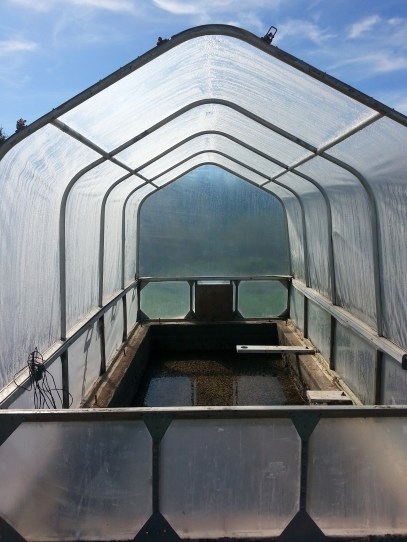 with large, continuously-flow-through chambers. These chambers were made of greenhouse plastic and an aluminum frame. Air was continuously pumped into the tank through slits in the front cover and out of the tank through a square outflow venturi. The air flow speed was measured using a cup anemometer at the outflow. Air temperature and manure temperature were measured using thermocouples suspended 10cm above the manure and within it at 80 and 160 cm from the surface. Air samples were continuously pumped out of the outflow venturi into a manifold, which switched the inflow every 30 secs. This allowed two inflow locations to be selected at any given time and then filter through the 6 tanks. Each sample was pulled through high-flow air dryers prior to entering one the two tunable diode laser trace gas analyzers (Campbell Scientific, Logan, UT).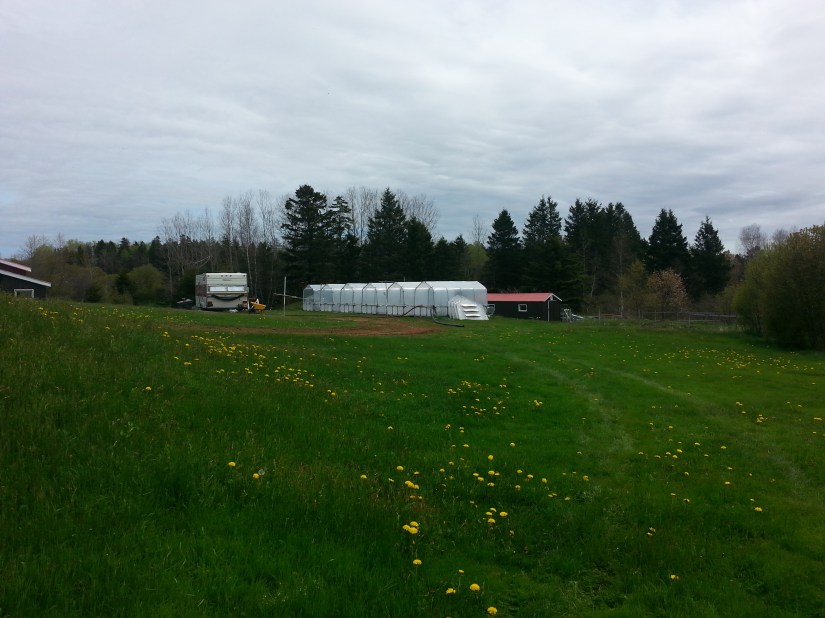
Each spring a new trial was started by filling the tanks with fresh manure obtained from a local farm. In 2016, we studied gradual filling compared to batch filling with different levels of inoculant (0%, 10%, and 20%) (Sokolov et al., to be published). In 2017 we studied manure acidification using 75% H2SO4 (Sokolov et al, under review). Lastly, in 2018 we studied the long-term effects of acidification by using looking at the inoculating effect of previously acidified manure.
 Environmental Research - Vera Sokolov